SELLING NOTES
En Bloc Rules Are Changing: What Does It Mean for Older Condominiums?
Older condominiums will face lower consent thresholds for collective sales, but the new rules also introduce stronger safeguards for owners who do not want to sell.
Published 11 Sep 2026
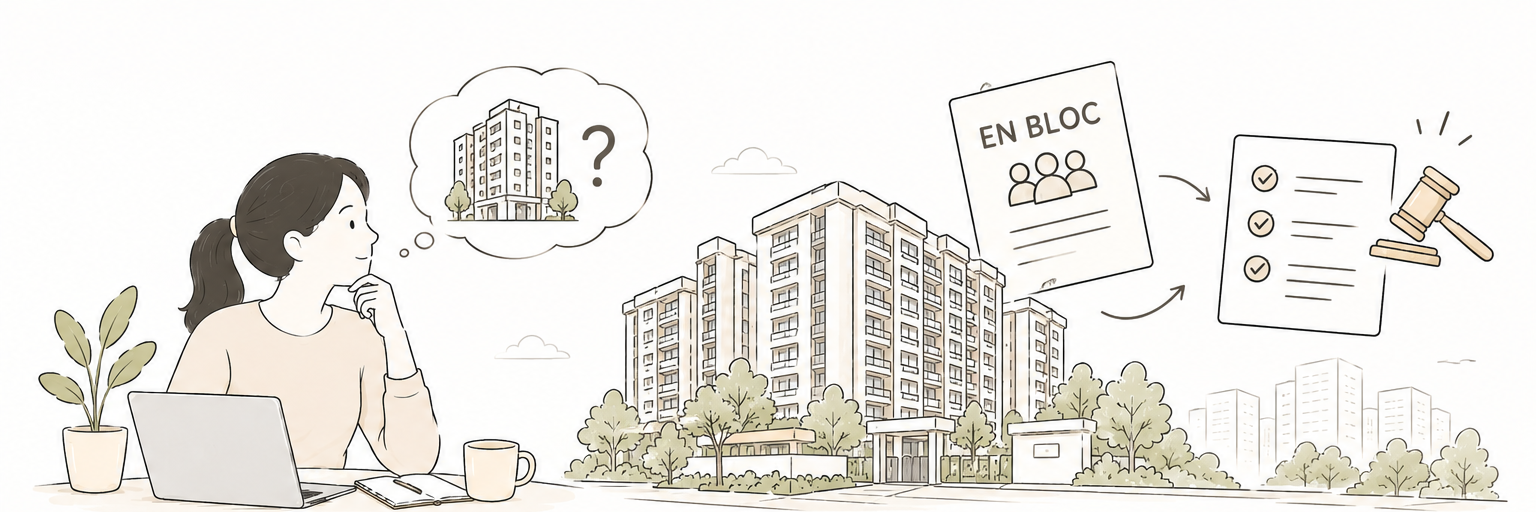
For many condominium owners, “en bloc” can sound like a straightforward opportunity: the development gets sold, owners receive their share of the proceeds, and the site is eventually redeveloped. In reality, a collective sale is rarely that simple. It requires enough owners to agree to the sale, involves a formal process, and can be particularly difficult when some owners strongly prefer to keep their homes.
Singapore's collective sale framework is now changing, with Parliament passing amendments on 8 September 2026 to make it easier for older developments to pursue redevelopment — while also putting tighter controls around how en bloc attempts are initiated and carried out.
So, what actually changed?
Lower Thresholds for Older Condominiums
The biggest change is the reduction in the consent threshold for older developments.
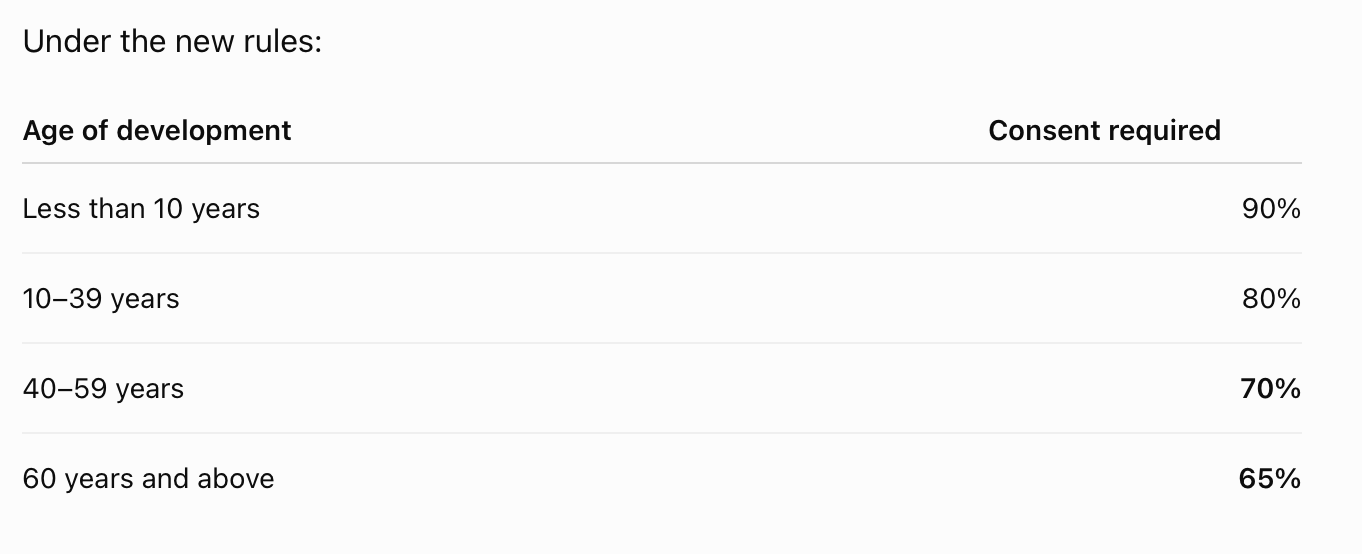
The existing thresholds for newer developments remain unchanged.
The idea is relatively straightforward. The collective sale framework was introduced in 1999, and many developments have become significantly older since then. As buildings age, owners may face increasingly expensive maintenance and upgrading works.
The Government cited costs such as lift modernisation, repainting, façade inspections, spalling concrete repairs, waterproofing and structural inspections. At some point, continuing to maintain an ageing development may become increasingly costly, while redevelopment could offer another option.
The lower threshold is therefore intended to give owners of older developments a more practical route to consider collective sale when there is broad support.
But Lower Thresholds Don't Mean Anyone Can Simply Force an En Bloc
The new rules do not mean that an older condominium can simply be sold because a minority of owners want out. While lowering the final consent threshold, the Government is making it harder to repeatedly initiate collective sale attempts.
1. The threshold to convene a general meeting to form a collective sale committee will increase from: 20% by share value or 25% by number of units to 35% of owners, measured either by share value or number of units.
2. The signature collection period will also be shortened from 12 months to six months.
3. And if an en bloc attempt fails, the restriction period before another attempt can be started will increase from two years to three years.
In other words, the framework is trying to strike a balance: Lower the barrier for genuinely ageing developments with sufficient support, while making repeated or prolonged en bloc attempts more difficult.
Why Is the Government Changing the Rules?
One of the underlying issues is the ageing private housing stock. According to official government records cited during the parliamentary debate, more than 360,000 private non-landed residential units are currently below 40 years old, while around 20,000 are above 40 years old.
As these developments age, the cost of keeping them in good condition can rise significantly. Minister for Law Edwin Tong highlighted examples such as lift replacement, where full replacement can cost between S$200,000 and S$300,000 per lift, while repainting a large development can cost several million dollars. These costs ultimately have to be borne by the owners. For some developments, continued maintenance may still make sense. For others, redevelopment could become a more attractive option.
The new framework gives older developments another path to consider.
What Does This Mean If You Own an Older Condo?
For owners, I think the change is worth looking at from two different perspectives.
1. If you're open to selling
The lower threshold could make a collective sale more achievable if your development is already 40 years old or more and there is broad support among owners.
Previously, an older development still needed 80% consent once it fell within the existing collective sale framework. That drops to 70% for developments aged 40–59 and 65% for those aged 60 and above.
This doesn't guarantee that an en bloc attempt will succeed. But it does reduce one of the major hurdles.
2. If you don't want to sell
This is where the additional safeguards become important.
The lower consent threshold means a sale could potentially proceed with fewer owners supporting it. But the new rules also aim to reduce the pressure associated with repeated collective sale attempts. The higher threshold to initiate an en bloc process, shorter signature collection period and longer restriction period after a failed attempt are all intended to prevent owners from being subjected to prolonged or repeated campaigns.
The Government has also increased the limit on court-ordered additional sale proceeds that can be awarded to objecting owners, from 0.25% to 0.5% of the sale proceeds for each lot or flat, or S$2,000, whichever is higher.
The Six-Month Window Could Be Challenging
One area that received considerable discussion in Parliament was the new six-month deadline for collecting signatures.
On paper, six months may sound like plenty of time. In practice, collective sales can involve hundreds of owners, including people who are overseas, elderly owners, owners dealing with probate matters and households that simply need more time to understand what the sale means for them.
Several MPs raised concerns that a fixed six-month period could create practical difficulties for larger developments.
The Government, however, noted that a significant majority of signatures are typically obtained within the first few months of an en bloc exercise, and decided that a shorter period would help reduce prolonged uncertainty and pressure on non-consenting owners.
For owners, this means an en bloc exercise may become more time-sensitive once it begins.
Does This Mean Older Condos Are Now More Likely to Go En Bloc?
The new thresholds make collective sales more achievable for older developments, but there are still many other factors involved.
These include:
• the location and redevelopment potential of the site
• the size and configuration of the land
• the property's existing lease
• development restrictions and planning parameters
• the potential value to a developer
• the price owners are willing to accept
• maintenance costs
• and, importantly, whether enough owners genuinely support the sale
An old condominium isn't automatically an attractive en bloc candidate. Likewise, a development that has redevelopment potential may still struggle to reach the required level of support.
What About Condominiums That Are Already Trying to Go En Bloc?
The amendments also include transitional arrangements.
Most of the changes will apply to ongoing collective sale exercises where the first signature to the collective sale agreement has not been obtained before the new law comes into force.
Where the first signature has already been obtained, the existing rules will continue to apply.
There is also a provision for collective sale committees that are still collecting signatures to convene a general meeting and decide whether to terminate the existing agreement and proceed under a new agreement subject to the revised rules. These committees will have seven months from the start date to meet the required threshold for the new agreement.
So if you're currently part of an en bloc exercise, the timing of your collective sale process matters.
The Part Owners Shouldn't Overlook: What Happens After the Sale?
An en bloc price can look attractive on paper. But receiving the sale proceeds is only one side of the equation.
The other question is: Where do you go next? This can be particularly important for older owners who have lived in the same condominium for decades.
A collective sale could mean having to purchase another property at prevailing market prices, take on a new mortgage, use more CPF or cash, or potentially move to a different location.
• For a younger household, there may be more flexibility to take on a new loan or move elsewhere.
• For an elderly owner who has already paid off the mortgage, however, replacing an existing home with another property could create a very different financial situation.
That's why the value of an en bloc offer shouldn't be looked at in isolation.
The more useful question is: After the sale, how much do I actually have left — and what can that realistically buy me?
Final Thoughts
The biggest takeaway is that the new rules aren't simply “making en bloc easier.”
They're doing two things at the same time.
1. For older developments, the lower consent thresholds make redevelopment a more realistic possibility.
2. But for all developments, the higher initiation threshold, shorter signature window and longer restriction period are designed to make collective sale attempts more structured and less disruptive.
For owners of an older condominium, this makes the conversation around hold, sell or pursue an en bloc more relevant than before.
But an en bloc shouldn't be viewed purely as a potential windfall. If your development is considering a collective sale, the important questions are not just “How much can we sell for?”, but also “What will I receive?”, “How is the sale proceeds apportioned?”, “What will my replacement home cost?”, and “Does selling actually make sense for my circumstances?”
As the collective sale framework evolves, understanding those numbers may matter just as much as understanding the headline en bloc price.
Let's Talk About Your Situation
If this article helped answer some of your questions but raised a few new ones, you're not alone. Every property journey is different. If you'd like to discuss your own situation or have a question after reading this article, feel free to leave me a message below.