SELLING NOTES
Third-Timer? What Can You Buy After Using Your Two HDB Housing Subsidies?
You may have used up your HDB subsidies, but your housing options do not end there. If you are approaching retirement, the bigger question may be whether to downsize to senior public housing or stay in your current home and monetise your lease.
Published 15 Sep 2026
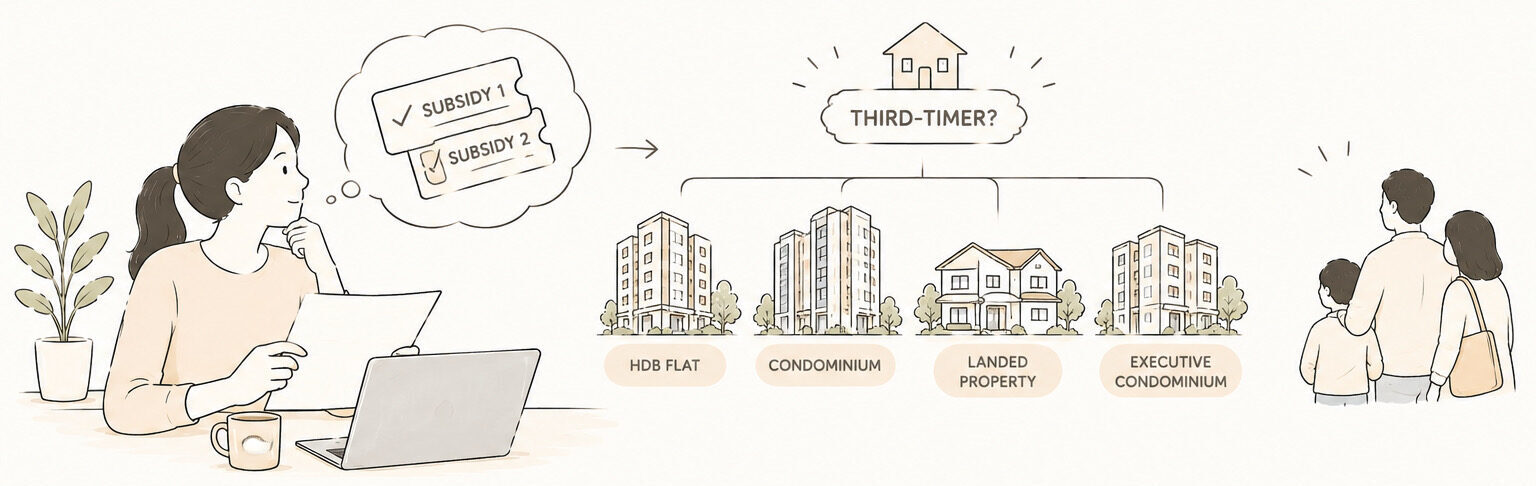
There is a common misconception that once you have bought two subsidised HDB flats, you are essentially “locked out” of public housing. That is not quite the case. If you have already bought two subsidised flats or otherwise used two housing subsidies, you are generally considered a third-timer when applying for another subsidised HDB flat.
For someone who is still relatively young, the choices are more limited. But for seniors, HDB provides specific housing options that can make right-sizing possible. And if you already own a home, there is another question worth considering: Do I really need to move — or can I unlock some of my home's value while continuing to live there? This is where Senior Public Housing and the Lease Buyback Scheme (LBS) become particularly relevant.
First, what counts as being a "third-timer"?
In simple terms, a third-timer refers to an individual who has already received two housing subsidies from the HDB.
This can include situations where you have previously bought subsidised housing such as:
• A flat bought from HDB (A BTO flat or A Sale of Balance Flats (SBF) flat)
• A resale flat bought on the open market with CPF housing grant
• A Design Build and Sell Scheme (DBSS) flat bought from a property developer
• An Executive Condominium (EC) unit bought from a property developer
• Other forms of housing subsidy, e.g. enjoyed benefits under the Selective En bloc Redevelopment Scheme (SERS), privatisation of HUDC estate, etc.
The important point is that being a third-timer is about the number of housing subsidies you have received, not simply the number of HDB flats you have owned. For example, someone who has bought two subsidised BTO flats would generally have used two housing subsidies. On the other hand, buying a resale HDB flat on the open market is a different situation. A resale flat purchased with a CPF Housing Grant can also have implications for your housing subsidy history.
Example:
Resale Flat + CPF Housing Grant = Subsidised Housing (1 Subsidy Used)
Resale Flat + HDB Loan Only (No Grants) = Non-Subsidised Housing (0 Subsidies Used)
So, what can a third-timer buy?
If you have already used two housing subsidies, you generally cannot simply apply for another standard subsidised BTO flat.
But there are still several possibilities.
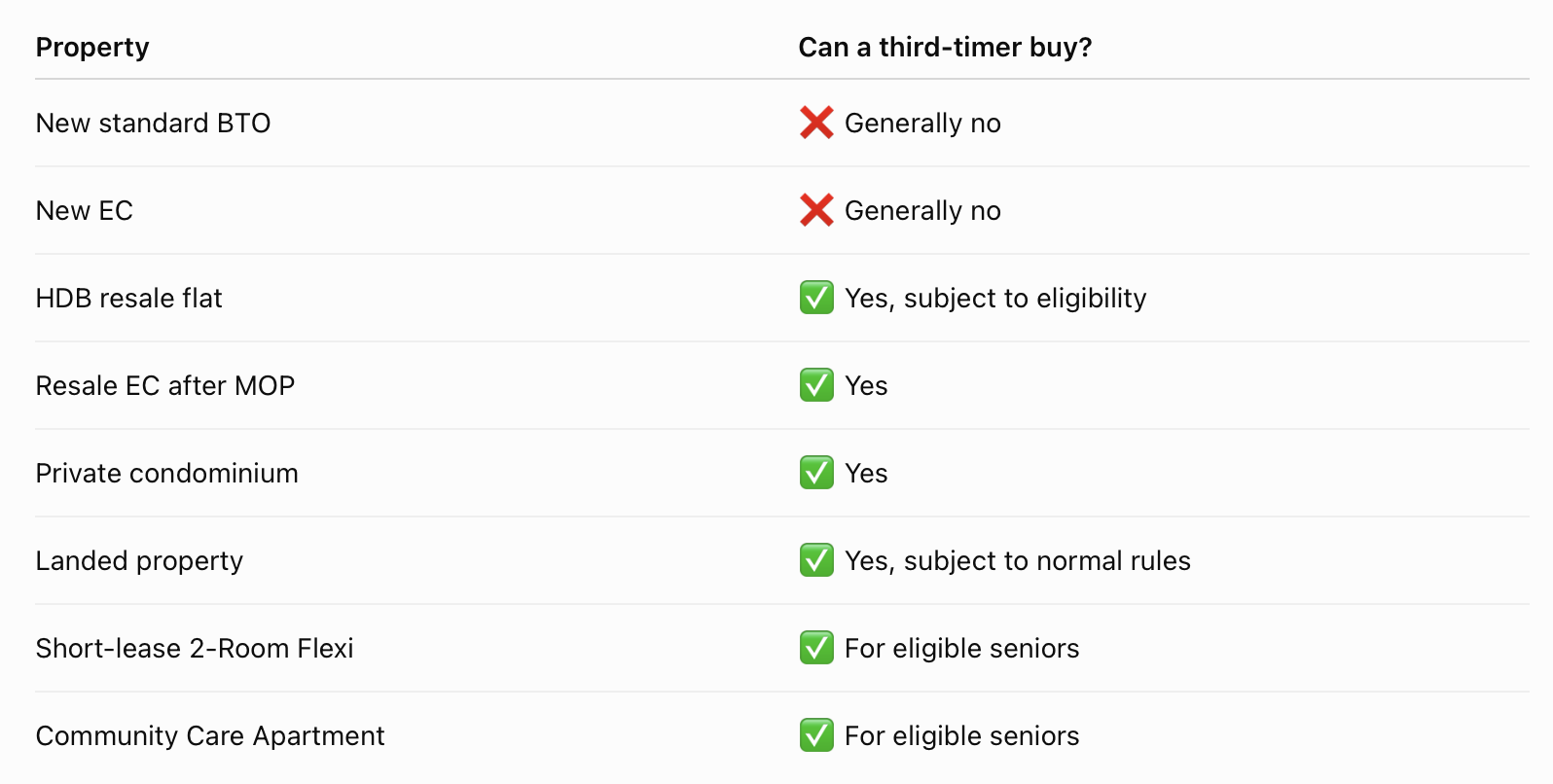
If you are a senior, two HDB options become especially interesting
For an older homeowner, there are two very different ways to approach retirement housing:
Option 1: Move to senior public housing
You sell your existing home and right-size into a suitable senior housing option, such as a short-lease 2-Room Flexi flat or a Community Care Apartment, subject to the relevant eligibility conditions.
Option 2: Stay where you are and use the Lease Buyback Scheme
Instead of moving, you can potentially sell the tail-end of your HDB lease back to HDB and continue living in your existing flat.
The difference is quite simple:
• Senior public housing = move and right-size.
• Lease Buyback = stay and monetise.
Option 1: Short-Lease 2-Room Flexi
A 2-Room Flexi flat can be an option for seniors who want to move into a smaller and more manageable home.
For eligible seniors, short leases can range from 15 to 45 years, allowing the lease length to be matched more closely to their housing needs. The shorter lease also makes the flat more affordable than purchasing a conventional 99-year flat.
However, there is an important trade-off: A short-lease 2-Room Flexi flat is not intended to function like a normal resale flat. These flats cannot simply be sold on the open market like a regular 99-year HDB flat. So if you are considering this option, you should think of it primarily as housing for your own retirement years, rather than an asset you are buying for future capital appreciation.
Why might this appeal to a senior?
A smaller flat can mean:
• Less space to maintain
• Lower housing costs
• A more manageable home for one or two people
• The ability to release equity from a larger existing flat
• A home designed around longer-term ageing needs
For someone living alone in a large 4-room or 5-room flat, this can be a very different proposition from continuing to maintain a home that has become old and unnecessarily large.
What about Community Care Apartments?
Community Care Apartments, or CCAs, are another senior housing option. They are different from a conventional HDB flat because the housing is designed around independent living with integrated care support.
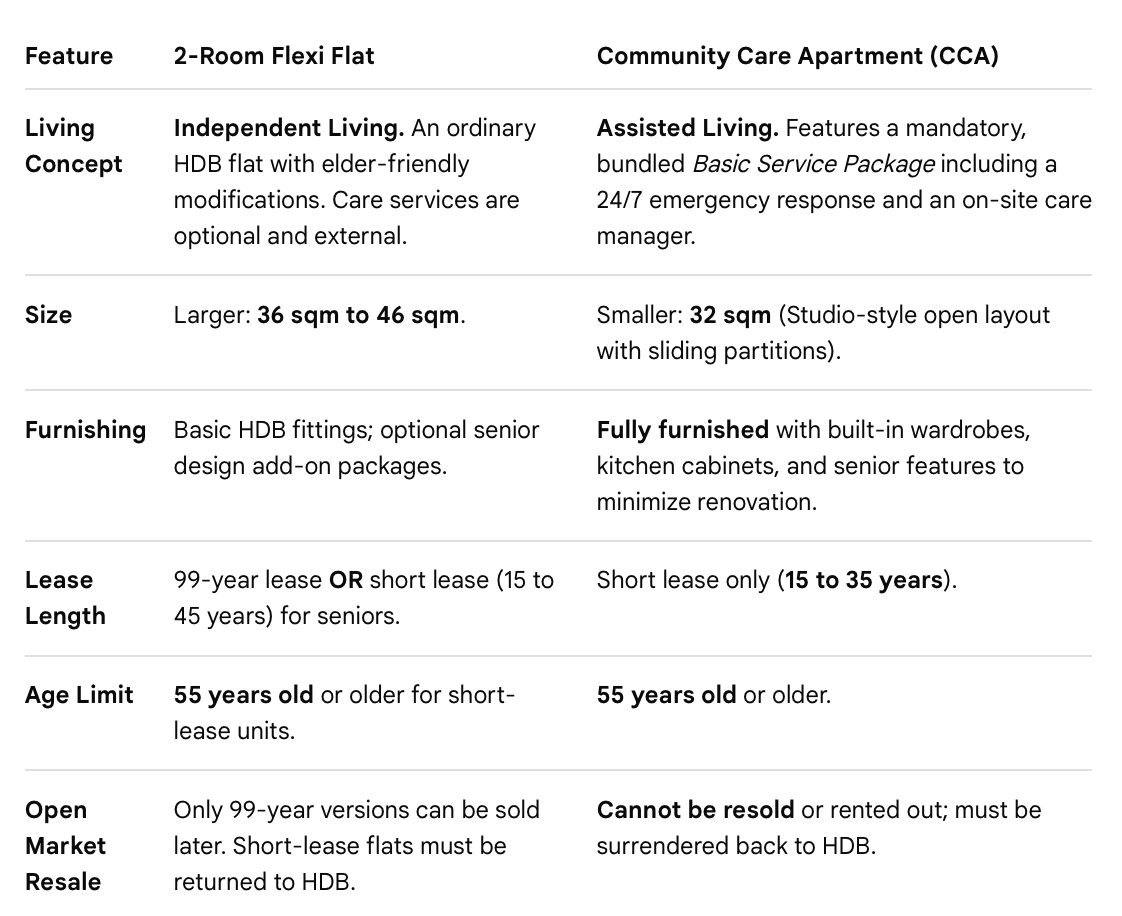
One important distinction is the care model.
• 2-Room Flexi You live independently. Senior-friendly features may be incorporated into the flat, but care services are generally something you arrange separately if required.
• Community Care Apartment, the housing comes with a mandatory Basic Service Package, providing services designed to support seniors living independently for longer.
Option 2: What if you don't want to move?
The flat may be bigger than you need. But you don't want to:
• Pack up and move
• Leve your neighbourhood
• Lose proximity to your friends and family
• Give up a familiar home
• Start again somewhere else
Then you have Lease Buyback Scheme, where an eligible homeowner can sell part of the remaining lease to HDB while continuing to live in the flat. In other words: You monetise part of the lease without physically moving out.
Senior Public Housing vs Lease Buyback
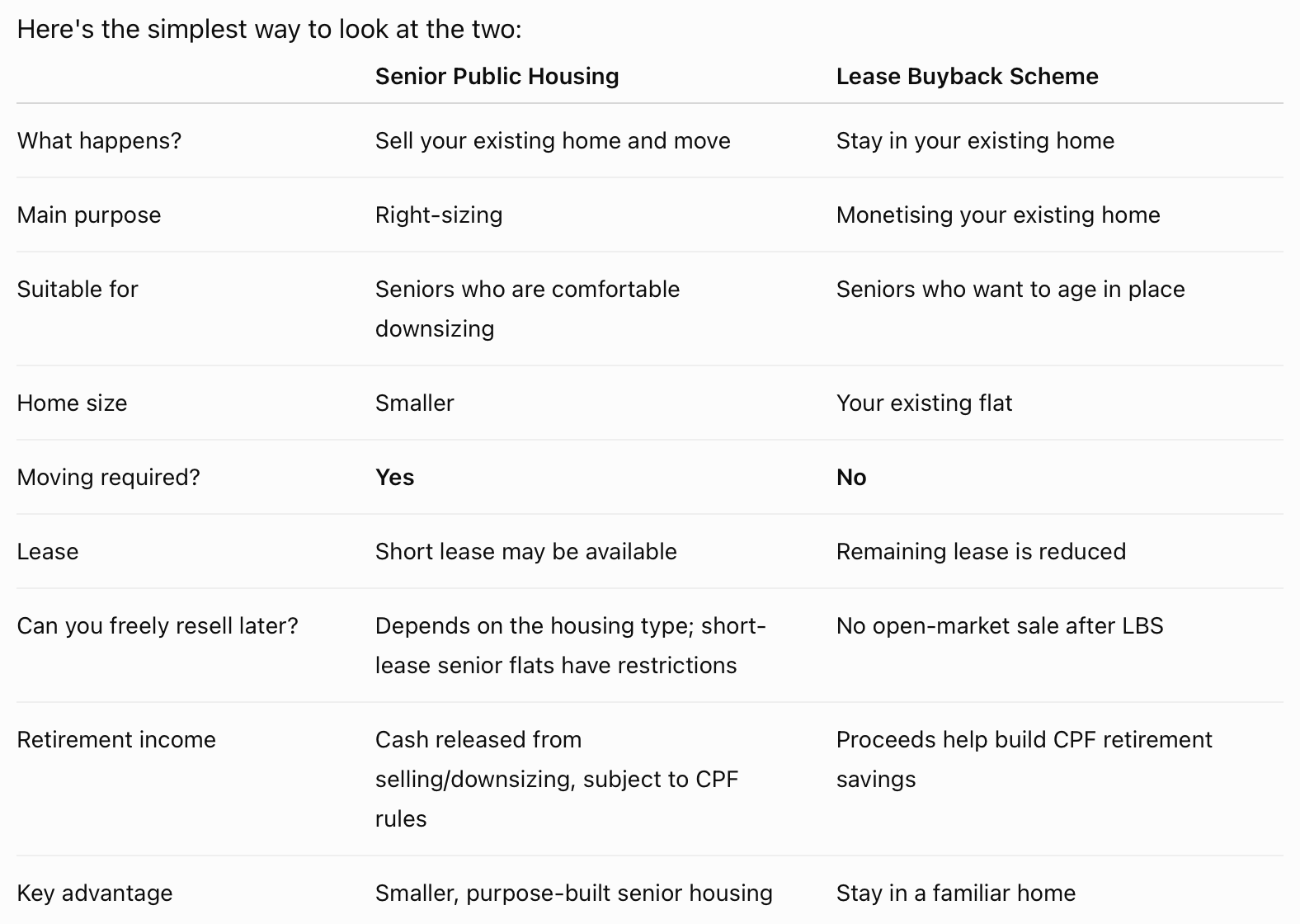
Neither option is automatically "better". It depends on what you value more.
So which option should a third-timer choose?
There isn't a universal answer.
I would start with one simple question: Do you want to move?
If yes → explore senior public housing and the financial implications of downsizing.
If no → explore whether the Lease Buyback Scheme can help you monetise your current home.
Then ask a second question: What do you need your property to do for you in retirement?
Do you need:
• More monthly income?
• More cash savings?
• A smaller home?
• Less maintenance?
• Better accessibility?
• Proximity to family?
• The ability to stay in the same neighbourhood?
Your answer may change the most suitable option.
A note before making a decision: HDB's eligibility requirements, housing subsidy rules, CPF requirements and senior housing policies can change. Your eligibility also depends on your household circumstances and previous housing history. If you're considering a third HDB purchase, downsizing or Lease Buyback, check your eligibility before making a decision.
Let's Talk About Your Situation
If this article helped answer some of your questions but raised a few new ones, you're not alone. Every property journey is different. If you'd like to discuss your own situation or have a question after reading this article, feel free to leave me a message below.
Disclaimer: This article is for general information and educational purposes only and should not be taken as financial, legal, tax or investment advice. Information may change over time; please verify the latest requirements and seek professional advice where appropriate.