UPGRADING NOTES
Should You Sell Your HDB and Buy a Condo? Part 1
Published 22 Sep 2026
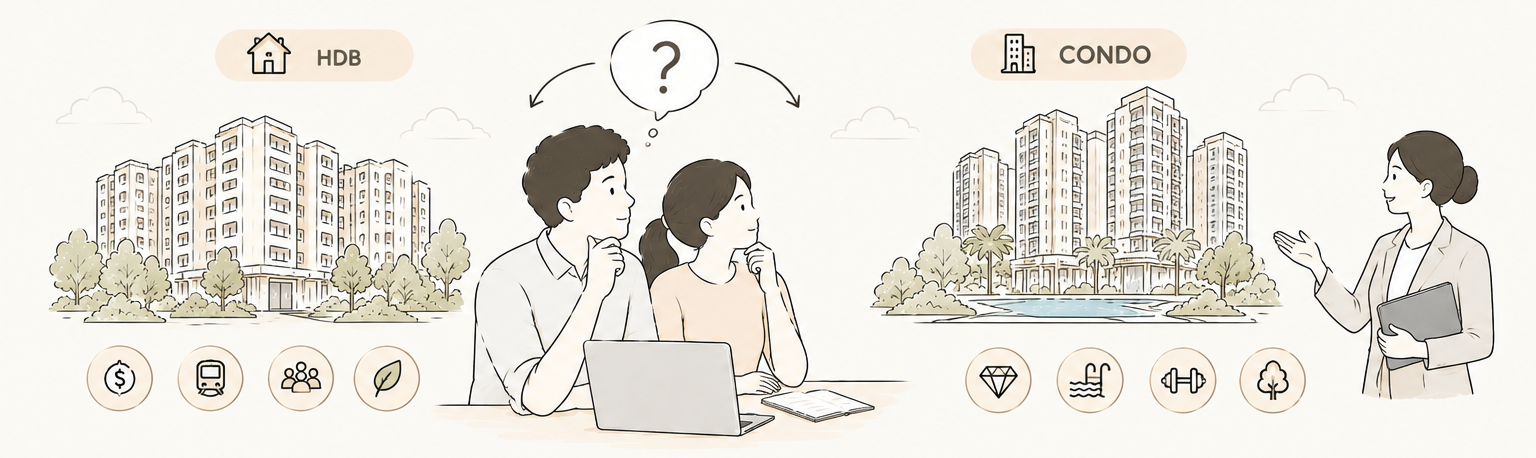
Upgrading to a private property can open up different possibilities, but the bigger question is whether the move makes sense for your finances, lifestyle and longer-term plans.
For many HDB owners, reaching the 5-year Minimum Occupation Period (MOP) brings a new question:
Should I continue living in my HDB, or is it time to consider a private property?
There is no universal answer. A condo may offer a different lifestyle, greater flexibility in ownership and financing, and exposure to a different segment of the property market. But it also comes with a significantly higher purchase price, larger financial commitments and different risks.
Before deciding to upgrade, it is worth looking at both sides of the equation.
Why Do HDB Owners Consider Upgrading?
1. Your HDB flat is getting older
Lease decay is an important consideration when holding an older HDB flat. As the remaining lease shortens, the pool of potential buyers may become more limited because financing and CPF usage can be affected by the property's remaining lease and the buyer's age. This does not mean every older HDB flat will automatically lose value. Location, demand, flat type and surrounding amenities still matter. But if you are holding an older flat for the long term, it is worth considering how its remaining lease may affect your eventual exit.
2. You want to move into the private property market
Moving from an HDB flat to a private condominium changes the type of property market you participate in.
Private residential properties have different pricing dynamics, buyer profiles and ownership considerations from HDB flats.
For some homeowners, the upgrade is primarily about lifestyle. For others, it is part of a longer-term plan to build and eventually restructure their property assets. These are two very different objectives
3. A larger property can mean a larger financial exposure
Property appreciation is usually discussed in percentage terms, but the actual dollar amount also depends on the size of the asset.
For illustration:
A 5% increase on a $600,000 property = $30,000
A 5% increase on a $1.5 million property = $75,000
The reverse is also true. A larger property does not just create the possibility of larger gains. A decline in value can also translate into a larger dollar loss. So upgrading should never be based on the assumption that a more expensive property will automatically produce better returns.
But There Are Good Reasons Not to Upgrade Too
1. Your HDB may still suit your needs
If your current flat is well located, fully paid or comfortably affordable, moving to a condo may not necessarily improve your financial position.
You may be exchanging: Lower housing costs for Higher mortgage + maintenance + other ownership costs
The lifestyle benefits may be worthwhile, but they should be weighed against the additional financial commitment.
2. The purchase price is only the beginning
A condo purchase involves more than the headline price.
You need to consider:
• Down payment
• Buyer's Stamp Duty (BSD)
• Additional Buyer's Stamp Duty (ABSD)
• Legal fees
• Mortgage interest
• Monthly maintenance fees
• Property tax
• Renovation and furnishing
• Insurance
• Emergency reserves
A household that can technically qualify for a larger loan does not necessarily need to take the maximum amount available. Affordability should be based on what you are comfortable carrying, not simply what the bank is willing to lend.
What About Building Wealth Through Property?
It is true that private property can provide greater exposure to a higher-value asset.
But property returns are not guaranteed, and the outcome depends on factors such as:
• Purchase price
• Location
• Development
• Unit selection
• Holding period
• Financing cost
• Market conditions
• Selling price
A $1.5 million condo that appreciates by 5% produces a larger dollar gain than a $600,000 flat appreciating by 5%.
But if the condo costs significantly more to own and finance, those additional costs need to be included when assessing the overall return. Higher asset value does not automatically mean better investment performance.
Think About Your Next Move Too
One reason some homeowners consider upgrading is the flexibility that private property ownership can provide. Depending on your circumstances, private property ownership may offer different options for future portfolio planning, refinancing or selling.
However, strategies such as decoupling or purchasing multiple properties involve specific legal, financing and tax considerations. They should not be treated as automatic benefits of owning a condo.
Don't Forget Your Retirement Plan
Your home is likely to be one of your largest assets.
That means your decision today can affect what you have available later in life.
Some homeowners may eventually choose to: Buy a larger home → Hold it through their peak earning years → Sell and right-size later
The idea is straightforward: if the property has appreciated, selling it later could release equity that can be used towards a smaller home, retirement savings or other financial needs. But this is a plan, not a guaranteed outcome.
Property prices can move in either direction, and the cost of the replacement property also matters. A retirement plan should therefore not depend entirely on future property appreciation.
Age and Timing Matter — But Don't Rush
Younger buyers may have access to longer loan tenures, which can reduce monthly repayments. They also have more time before retirement to repay the mortgage and potentially ride through different property cycles.
But being young does not automatically mean you should upgrade as soon as you can. Starting earlier also means taking on a large financial commitment earlier.
The Biggest Mistake: Looking Only at the Condo
An upgrade is not just about choosing a condo.
You are effectively making two decisions:
1. Selling your existing HDB
Consider:
• Current market value
• Outstanding loan
• CPF used and accrued interest
• Selling costs
• Cash proceeds
• Your next housing timeline
2. Buying your next property
Consider:
• Purchase price
• Stamp duties
• Loan amount
• Monthly repayment
• Maintenance fees
• Renovation
• Cash and CPF requirements
• Future affordability
The two transactions need to work together. A condo may look affordable on its own, but the overall move may tell a different story once the sale proceeds, CPF, taxes and financing are included.
Before You Make the Move
If you are seriously considering upgrading, work through these five numbers first:
1. How much can I sell my HDB for?
2. How much CPF and cash will actually be available after the sale?
3. How much will the new property cost me all-in?
4. What will my monthly housing commitment become?
5. What happens if the condo does not appreciate as expected?
Only after answering these questions should you start comparing individual condos.
Final Thoughts
Selling your HDB to buy a condo is not automatically an upgrade — it is a change in both your lifestyle and your financial position.
For some households, the move may provide the space, facilities, flexibility or longer-term property exposure they are looking for. For others, staying in the HDB may leave them with greater financial flexibility and less pressure.
At the end of the day, a property upgrade should make sense not just when you buy it, but for the years you plan to own it.
Let's Talk About Your Situation
If this article helped answer some of your questions but raised a few new ones, you're not alone. Every property journey is different. If you'd like to discuss your own situation or have a question after reading this article, feel free to leave me a message below.
Disclaimer: This article is for general information and educational purposes only and should not be taken as financial, legal, tax or investment advice. Information may change over time; please verify the latest requirements and seek professional advice where appropriate.