
MARKET INSIGHTS
HDB Limited Edition - Jumbo HDB Flats: Why Are These Homes So Large?
Published 26 Sep 2026
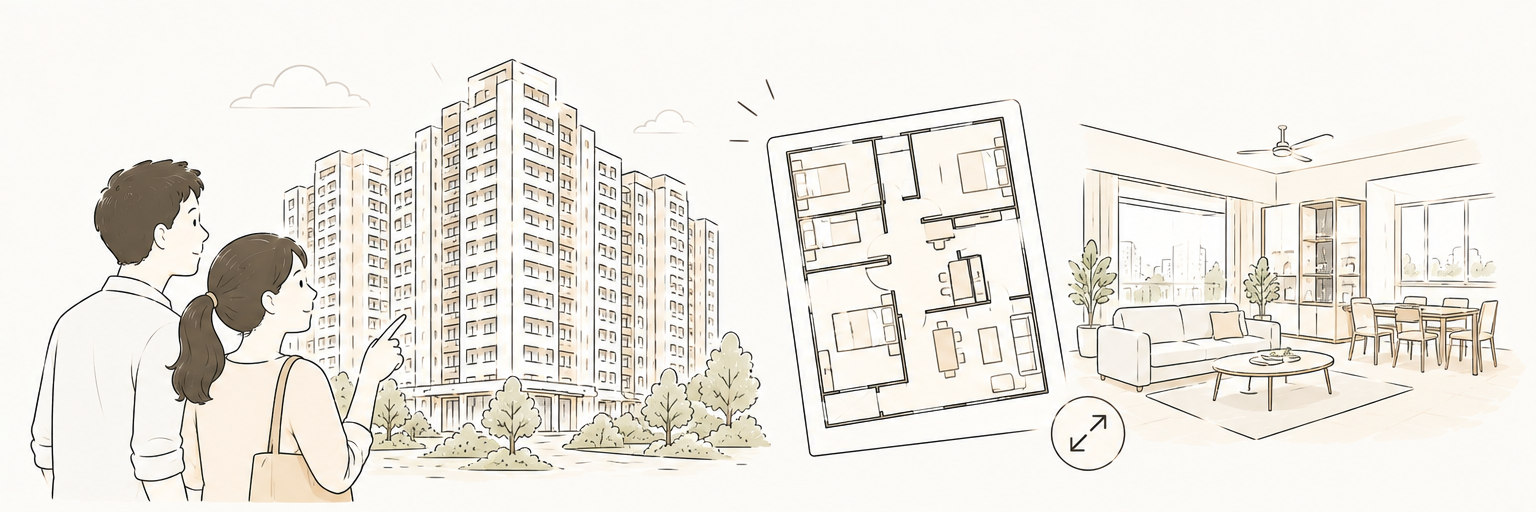
From an unusual solution to an oversupply problem to one of Singapore's rarest HDB housing types — here's how jumbo flats came about and how the HDB Conversion Scheme works.
Walk into a jumbo HDB flat and one thing becomes immediately obvious: It is much bigger than the typical HDB flat we see today.
Some jumbo flats were created by combining two adjoining HDB units, resulting in homes that can be significantly larger than a conventional 4-room or 5-room flat. But why do these flats exist in the first place? And can you actually create your own jumbo flat today?
What Exactly Is a Jumbo HDB Flat?
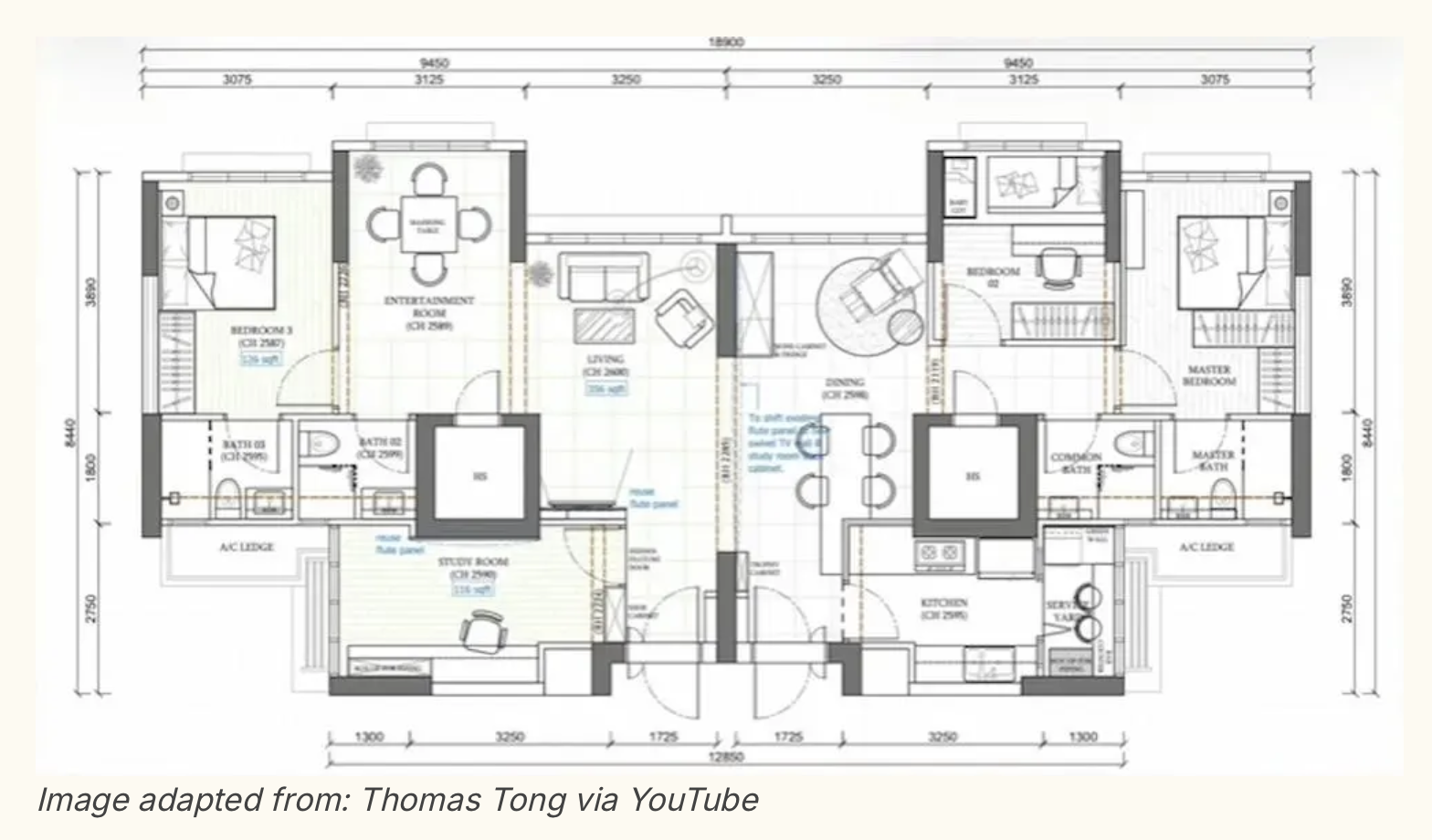
A jumbo HDB flat is an expansive public housing unit created by merging two adjoining flats under a single lease. Through this scheme, eligible homeowners could buy an adjacent unit (typically 3-room or smaller) and integrate it with their own to form one massive living space.
Key Features of Jumbo Flats
Substantial Living Space:
Because they originate from two separate units, jumbo flats offer significantly more room than standard HDB layouts.
Flexible Sizes:
While the exact square footage depends on the specific units combined, they frequently measure 1,400 sq ft or more.
Unique Layouts:
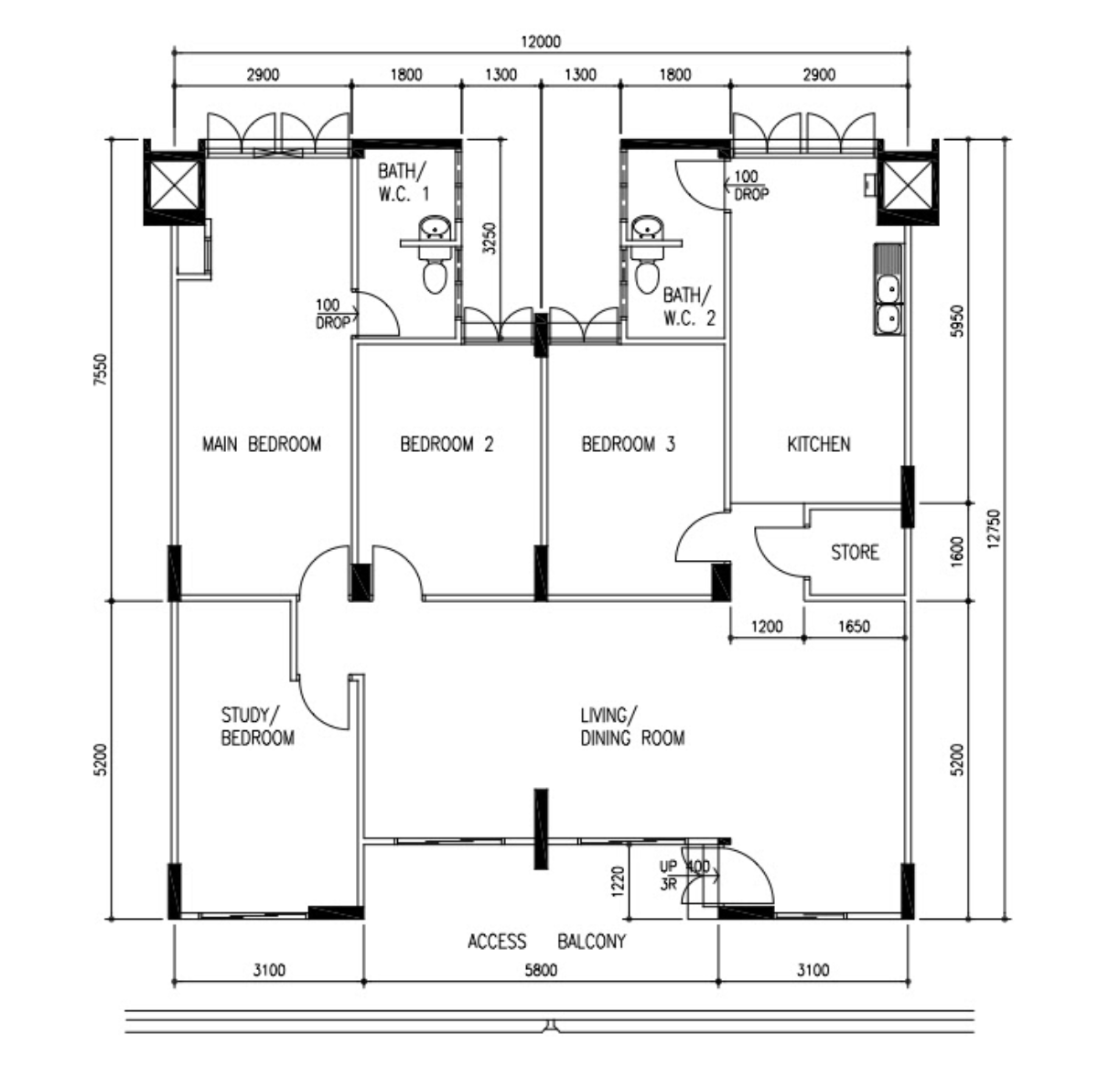
Their floor plans differ greatly from modern BTO layouts, often boasting massive living areas, additional bedrooms, dual entryways, or extra utility spaces.
How Did Jumbo Flats Come About?
The story goes back to the late 1980s. At the time, there was an oversupply of certain HDB flats, particularly in some newer estates where demand had not developed as expected. Rather than leaving the units vacant, HDB began combining adjoining unsold 3-room and 4-room flats to create larger homes.
Woodlands was among the first towns where such flats appeared, with similar examples subsequently found in other towns including Yishun, Bedok, Tampines and Jurong East.
In other words, jumbo flats were not originally designed as a luxury version of public housing. They emerged partly as a practical response to a very different housing market at the time.
Why Are Jumbo Flats So Unusual Today?
Unlike standard HDB layouts, jumbo flats are exceptionally rare. Modern public housing projects favor standardized, smaller footprints, leaving only around 2,900 jumbo units across Singapore today. The vast majority are concentrated in Woodlands, with the remainder scattered sparsely across other estates.
Consequently, these properties account for just a tiny fraction of the nation's total housing stock.
Age is another critical factor to consider: as of 2026, most existing jumbo flats have roughly 55 to 65 years remaining on their leases. Despite their aging leases, their expansive layouts remain highly sought after, particularly by multi-generational families seeking the rare luxury of extensive communal space under one roof.
What Is the HDB Conversion Scheme?
The HDB Conversion Scheme is a scheme that allows eligible buyers to combine two adjoining HDB flats into a single larger flat, subject to HDB's approval. It is particularly relevant for households that need more living space but want to remain within the HDB market.
However, this is not as simple as buying two neighbouring flats and knocking down the wall between them. The proposed combination has to be assessed by HDB for structural and other requirements before the conversion can proceed. Once approved, the two flats are combined and treated as one converted flat.
How Does the Conversion Work?
Broadly, the process involves several steps.
1. Find suitable adjoining flats
The flats need to meet the applicable requirements under the scheme.
2. Check with HDB
HDB needs to assess whether the proposed combination is feasible. You should not assume that any two neighbouring flats can automatically be merged.
3. Complete the purchase and conversion requirements
There are ownership, financing and administrative considerations depending on your circumstances.
4. Carry out the required alteration works
The conversion requires a physical connection between the two flats. The source material states that at least one opening of 1m by 2m is required between the units, with the necessary works carried out by an appropriately registered contractor. One unit's relevant PUB utility meters also need to be removed as part of the process.
5. The flats become one unit
Once the conversion is approved and completed, the two flats are treated as a single converted HDB flat.
What Happens to the Minimum Occupation Period?
The 5-year MOP is counted from the purchase of the second flat, according to the source material.
So imagine you already own an HDB flat and have lived there for 10 years. You then purchase the adjoining flat and convert the two units into one jumbo flat. You should not assume that the original 10 years of occupation automatically satisfy the MOP for the enlarged home. The relevant MOP for the converted flat is tied to the acquisition of the second flat.
Can You Split the Jumbo Flat Again Later?
No — once the two flats have been approved and converted into a single unit, the conversion is not simply reversible. The resulting property is treated as one converted flat.
Why Do Buyers Look for Jumbo Flats?
1. More Living Space
A jumbo flat can be particularly appealing to larger households that need:
• More bedrooms
• Larger living areas
• More storage
• Separate spaces for different generations
• Room for working from home
For a multi-generational household, having everyone under one roof without squeezing into a conventional flat can be a significant consideration.
2. Multi-Generational Living
A larger flat can make it easier for parents, children and grandparents to live together while maintaining some separation within the home.
For example, different sections of the flat could potentially serve different generations.
3. A Rare Type of HDB Home
Jumbo flats are not something you will find in every HDB estate. That makes the resale market for these homes different from the much larger pool of standard HDB flats. But rarity should not automatically be interpreted as guaranteed price appreciation.
A jumbo flat still needs to be assessed based on factors such as:
• Remaining lease
• Location
• Condition
• Layout
• Asking price
• Comparable transactions
• Buyer demand
Is a Jumbo Flat Automatically More Valuable?
Not necessarily.
This is an important distinction. A jumbo flat may have a much larger floor area, but that does not mean every jumbo flat will command a premium that reflects its size.
What About the Conversion Scheme Today?
There is an additional regulatory development worth watching. Following public concerns over a high-priced jumbo flat listing in Telok Blangah, HDB announced it is reviewing its Conversion Scheme.
HDB clarified that the advertised S$2.18 million asking price was significantly inflated compared to market realities, noting that comparable individual 3-room flats in the area had transacted between S$673,000 and S$771,000 over the preceding six months.
While the property offers a rare combination of ample space, a prime location, and a long remaining lease, its price tag is unprecedented. At S$2.18 million, the asking price sits S$450,000 above Singapore’s current HDB resale record—a S$1.73 million 5-room flat at City Vue @ Henderson. This makes a jumbo unit in a central location like Telok Blangah, especially one with over 90 years left on its lease, an exceptional anomaly rather than a market benchmark.
Ultimately, this episode underscores that not every jumbo flat commands an exorbitant premium. Instead, it highlights the need for buyers and sellers to carefully evaluate how converted flats are valued, particularly when directly comparable transactions are scarce.
Given that the Conversion Scheme is currently under review, anyone considering a similar property should check HDB's latest official requirements rather than relying on outdated articles or past precedents.
Final Thoughts
For buyers, the appeal is straightforward: more space without necessarily moving into private property.
But a jumbo flat also comes with its own considerations. The layout is unusual, the pool of comparable properties is smaller, and the rules surrounding conversion are important.
And with HDB currently reviewing the Conversion Scheme, the rules may evolve. So if you come across a jumbo flat on the resale market, don't look at the size alone.
Look at how the flat was created, what you are actually paying for, the remaining lease, the layout, the surrounding market — and the rules that apply to it.
Let's Talk About Your Situation
If this article helped answer some of your questions but raised a few new ones, you're not alone. Every property journey is different. If you'd like to discuss your own situation or have a question after reading this article, feel free to leave me a message below.
Disclaimer: This article is for general information and educational purposes only and should not be taken as financial, legal, tax or investment advice. Information may change over time; please verify the latest requirements and seek professional advice where appropriate.