BUYING NOTES
Are ECs Still a Good Buy After the 2026 Rule Changes?
The EC rules have changed significantly. But does that make Executive Condominiums less attractive — or simply more suited to buyers with a long-term plan?
Published 8 Sep 2026
What Changed for EC Buyers in 2026?
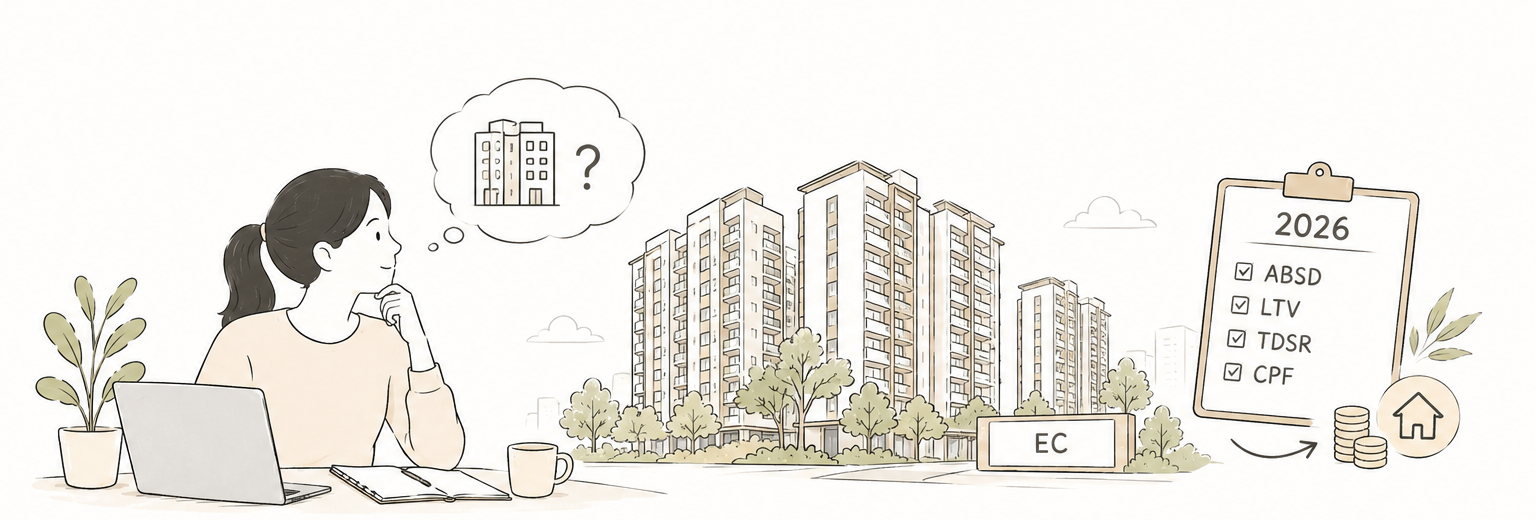
On 8 May 2026, the government introduced several changes to the Executive Condominium framework. The new rules apply to EC GLS sites where the tender closes on or after 8 May 2026.
The biggest changes affect how long buyers need to stay, how they finance the purchase and who gets priority at new launches.
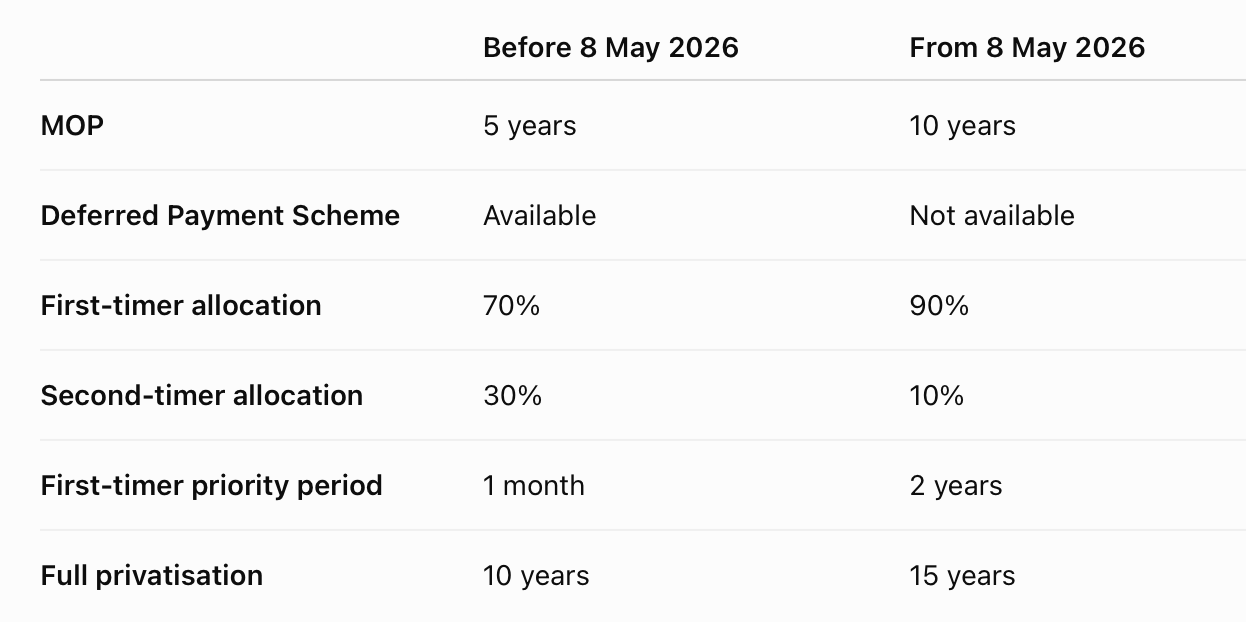
These changes are significant, particularly for buyers who previously viewed an EC as a stepping stone between an HDB flat and private property.
Why Did the EC Rules Have to Change?
For a period, ECs had become increasingly attractive not just as homes, but as a potential five-year upgrade strategy.
Between 2021 and 2025, around 75% of ECs sold on the open market were transacted within five years of reaching their MOP, compared with about 45% in the preceding five-year period. Average resale gains also increased substantially, from around $300K in 2021 to $660K in 2025. The number of EC resale transactions generating more than $1 million in gross profit also rose sharply, from just 4 cases in 2021 to 162 cases in 2025.
At the same time, new EC prices climbed significantly. Average new EC prices rose from around $797 psf in 2015 to $1,754 psf in 2025, while the median HDB resale price increased by about 51% over the same period. This was happening alongside a gradual shift in the buyer profile. First-timer buyers made up around 50% of EC buyers in 2020, but this fell to approximately 30–40% in 2024 and 2025.
More second-timer buyers, with accumulated CPF and proceeds from their previous homes, were competing for new EC launches. The strong demand was particularly evident in recent projects. Rivelle Tampines sold 92.5% of its 572 units during its launch weekend in March 2026, while Coastal Cabana moved 498 of its 748 units during its launch weekend. The numbers tell an interesting story: ECs had become increasingly attractive as an investment and upgrading strategy, not just as subsidised housing for families. The May 2026 changes can therefore be seen as an attempt to shift the EC market back towards its original purpose — longer-term owner-occupation by local families.
So, Are ECs Still Worth Buying?
The fundamental appeal of an EC hasn't disappeared. Eligible buyers can still access a new condominium-style development at a generally lower entry point than comparable private condominiums, while eligible first-timer families may also qualify for CPF Housing Grants.
What has changed is the flexibility. Under the new framework, an EC is much more clear that it is a long-term home. If you buy a new EC under the new rules, the 10-year MOP means you cannot simply sell after five years and move on to another property. That isn't necessarily a disadvantage if you already know that the home works for your family for the next decade.
What Does a 10-Year MOP Actually Mean?
Previously, one of the attractions of an EC was the potential to buy during its initial subsidised phase, fulfil the 5-year MOP and then sell on the open market. That created a relatively clear upgrade pathway for some buyers.
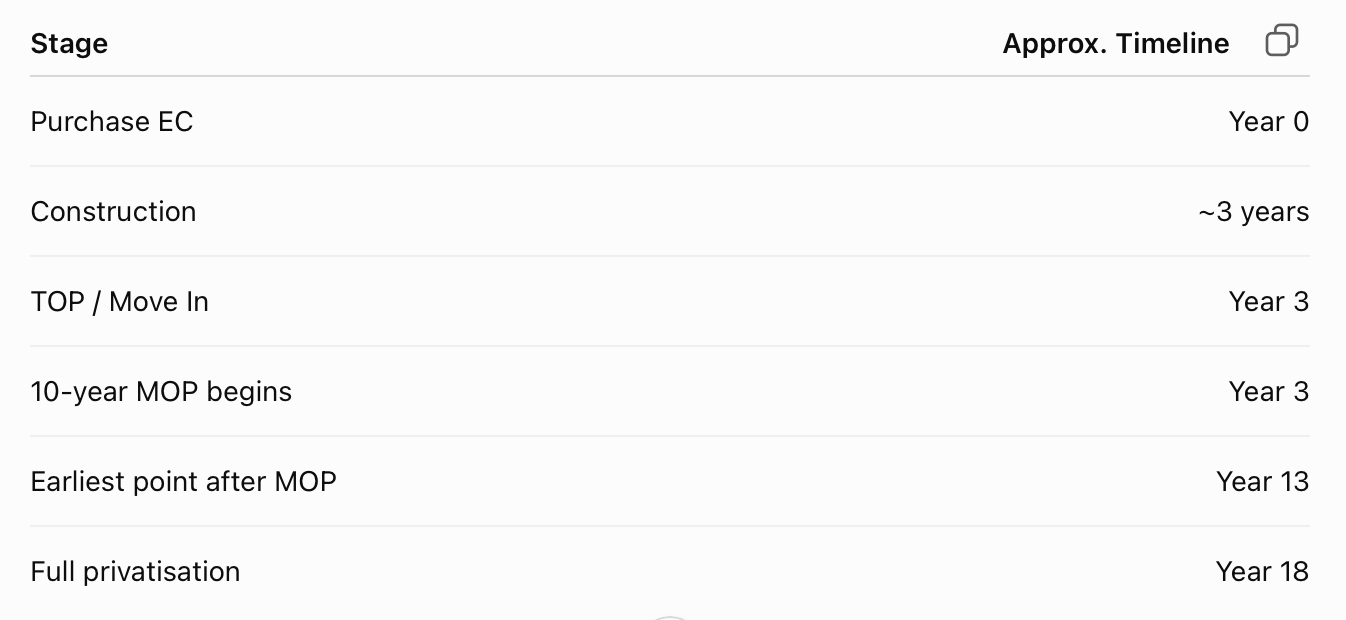
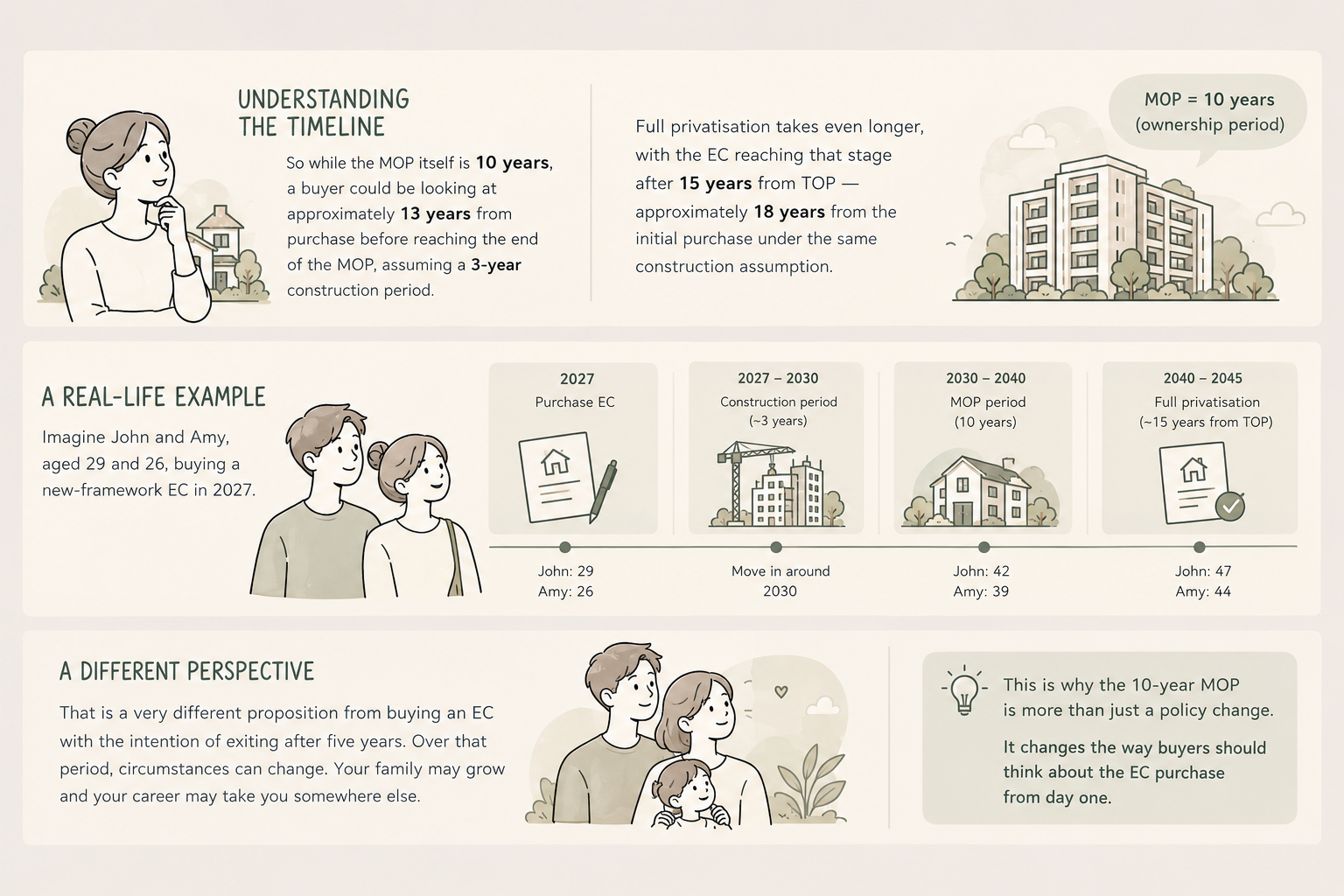
Under the new framework, that timeline has effectively been pushed much further out. With a 10-year MOP and full privatisation only after 15 years, buyers need to think beyond the initial purchase and construction period. The practical timeline is longer than many buyers may initially realise.
Assuming approximately three years of construction, a buyer purchasing a new-framework EC could be looking at roughly:
What About the Removal of DPS?
The removal of the Deferred Payment Scheme (DPS) is another major change, particularly for HDB upgraders.
At projects such as Rivelle Tampines, around 87.9% of buyers opted for DPS. This highlights how useful the scheme had become for buyers managing an existing property while waiting for their new EC to be completed. Under DPS, buyers could pay a smaller amount upfront, with a larger portion of the purchase price deferred until the development reached TOP.
This could provide valuable breathing room for households that still had:
1. An existing HDB loan
2. CPF funds tied up in their current home
3. An outstanding mortgage to manage
4. A need to sell their existing property later in the construction process
For new EC GLS sites under the post-May 2026 framework, DPS is no longer available. Buyers will instead follow the Normal Payment Scheme (NPS), with payments made progressively as construction reaches different stages. That makes cash-flow planning much more important.
There is, however, an interesting trade-off. DPS units were typically priced at a premium of around 3% over NPS units. With DPS removed, future buyers will no longer be paying this specific DPS premium. So while buyers lose the flexibility of deferring payments, future EC launches will not have pricing differentiation between DPS and NPS units.
Buyers should look beyond the launch price and understand the actual cash and CPF commitments throughout the construction period.
The Good News for First-Timers
Not every change is restrictive. Under the new framework, 90% of EC units are allocated to first-timer buyers, compared with 70% previously. The priority period for first-timers has also been extended from one month to two years.
This is an important shift. The EC scheme is being positioned more clearly towards first-time Singaporean families buying a home, rather than buyers treating the EC primarily as an investment or short-term upgrade strategy.
If you're a first-timer who is comfortable with the longer MOP, the new rules could actually improve your position when competing for an EC.
EC vs Private Condo: Which Makes More Sense?
This is probably the more important question for many buyers.
A private condominium gives you greater flexibility, with no MOP or income ceiling. But you are paying for that flexibility.
An EC can offer a lower entry point and potential CPF Housing Grant for eligible buyers, but comes with income restrictions and a much longer commitment under the new framework.
The price difference between new ECs and comparable OCR private condominiums can therefore still be substantial. The question is whether the savings justify the restrictions for your particular situation.
What About the Older ECs?
Some EC projects whose land tenders closed before 8 May 2026 remain under the previous framework.
This includes projects such as Solano Grand and Wynwood Grand.
It doesn't automatically mean every pre-8 May EC is a better purchase. Price, location, unit mix and development quality still matter. Buyers should understand that they are comparing not just different projects, but potentially two different EC frameworks.
Who Should Still Consider an EC?
An EC may make sense if you:
• Are an eligible first-timer family
• Want a new condominium-style home at a lower entry point than many private condos
• Are comfortable staying for the long term
• Have a stable financial position
• Don't need the flexibility to buy another property soon
• Are prepared to plan your CPF, cash and financing carefully
You may want to look at a private condo instead if you:
• Expect to move within the next 5–10 years
• Want the flexibility to buy another property
• Don't want an MOP restriction
• Need a wider pool of potential buyers when you sell
• Have the financial capacity to purchase private property without overstretching
Takeaway from the 2026 changes: ECs haven't become irrelevant.
They've simply become much more clearly designed for people who intend to stay.
Ultimately, there isn't one “best” property type. It depends on your income, existing property, CPF, cash position, family plans and how long you realistically expect to stay.
The old EC proposition could be summarised as:
Buy subsidised → live in it for five years → sell → upgrade.
The new proposition is closer to:
Buy at a potentially lower entry point → make it your long-term home → accept the restrictions in exchange for the price advantage.
That distinction is important.
If you're a first-timer family looking for a new condominium-style home and are comfortable staying for the long term, an EC can still be a very compelling option. But if your financial plan depends on selling after five years, unlocking your gains and moving on to the next property, the new framework makes that strategy considerably less straightforward.
Thinking About an EC?
Before booking an EC, I would recommend working through the full purchase timeline, not just the monthly instalment — including your CPF and cash requirements, existing home loan, financing options, MOP and what your next property move could look like.
If you're considering an upcoming EC such as Solano Grand or Wynwood Grand, reach out for a financial calculation or consultation. We can work through your numbers and compare the EC route against a private condominium based on your actual situation.
The right EC isn't simply the one with the lowest psf. It's the one that still makes sense for your life when you look several years ahead.
Let's Talk About Your Situation
If this article helped answer some of your questions but raised a few new ones, you're not alone. Every property journey is different. If you'd like to discuss your own situation or have a question after reading this article, feel free to leave me a message below.