SELLING NOTES
Selling Your HDB Flat Without Moving Out: How the Lease Buyback Scheme Works
For older homeowners who want to unlock some value from their HDB flat while continuing to live in it, the Lease Buyback Scheme offers another option — but it comes with an important trade-off: you are selling part of your remaining lease.
Published 13 Sep 2026
If you've only got a minute:
• The Lease Buyback Scheme (LBS) allows eligible senior HDB homeowners to sell part of their remaining lease to HDB while continuing to live in the flat.
• The proceeds are primarily used to top up the owners' CPF Retirement Accounts, with the balance potentially available as cash subject to the scheme's rules.
• You can choose how much lease to retain, depending on the age of the youngest owner.
• Once you take up LBS, your flat is not available for an ordinary resale on the open market or whole-flat rental.
• Before deciding, compare LBS with alternatives such as selling and downsizing, renting out a room, or other retirement monetisation options.
What is the Lease Buyback Scheme?
For many Singaporeans, the home they live in may also be their largest asset. But having a valuable home does not necessarily mean having enough cash flow for retirement.
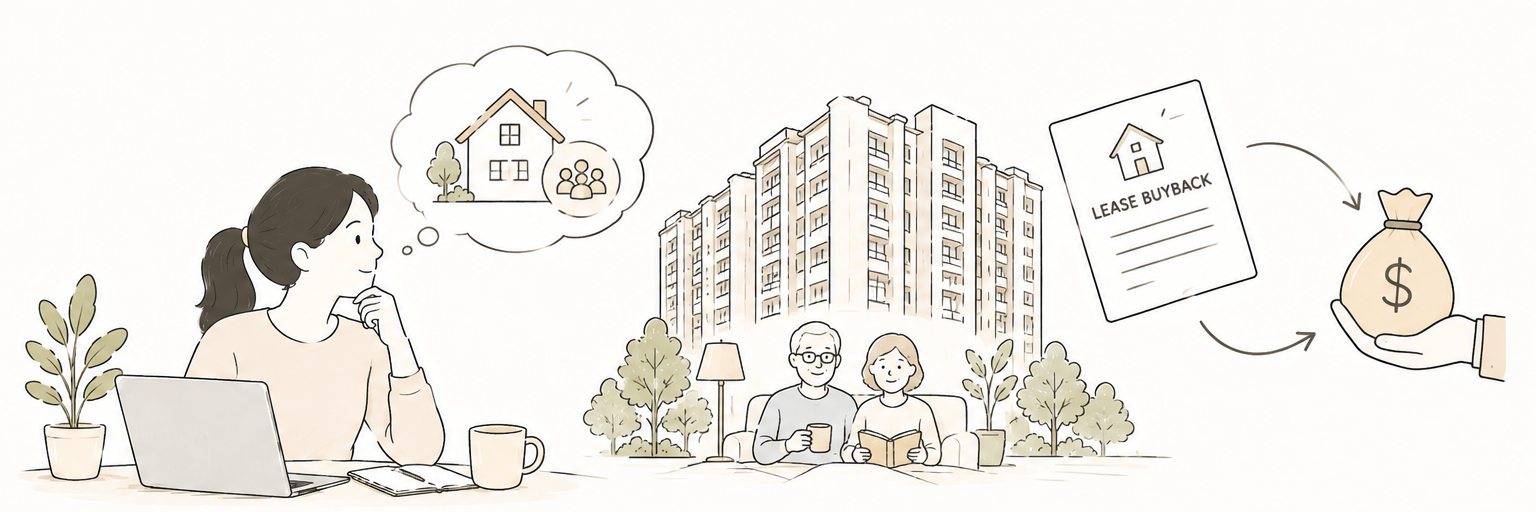
The Lease Buyback Scheme (LBS) was introduced to give eligible senior homeowners another way to monetise their HDB flat without having to move out. Under the scheme, homeowners sell the tail-end portion of their flat's remaining lease back to HDB, while retaining a shorter lease that allows them to continue living in the flat. The proceeds are then used primarily to top up the owners' CPF Retirement Accounts, helping to provide retirement income through CPF LIFE where applicable.
In simple terms: You are not selling your home and moving elsewhere. You are selling part of the lease you no longer need, while keeping the home for your retirement years. That can be attractive for homeowners who are comfortable staying where they are for the long term. But it is also a decision that reduces your future flexibility.
Lease Buyback Scheme Eligibility
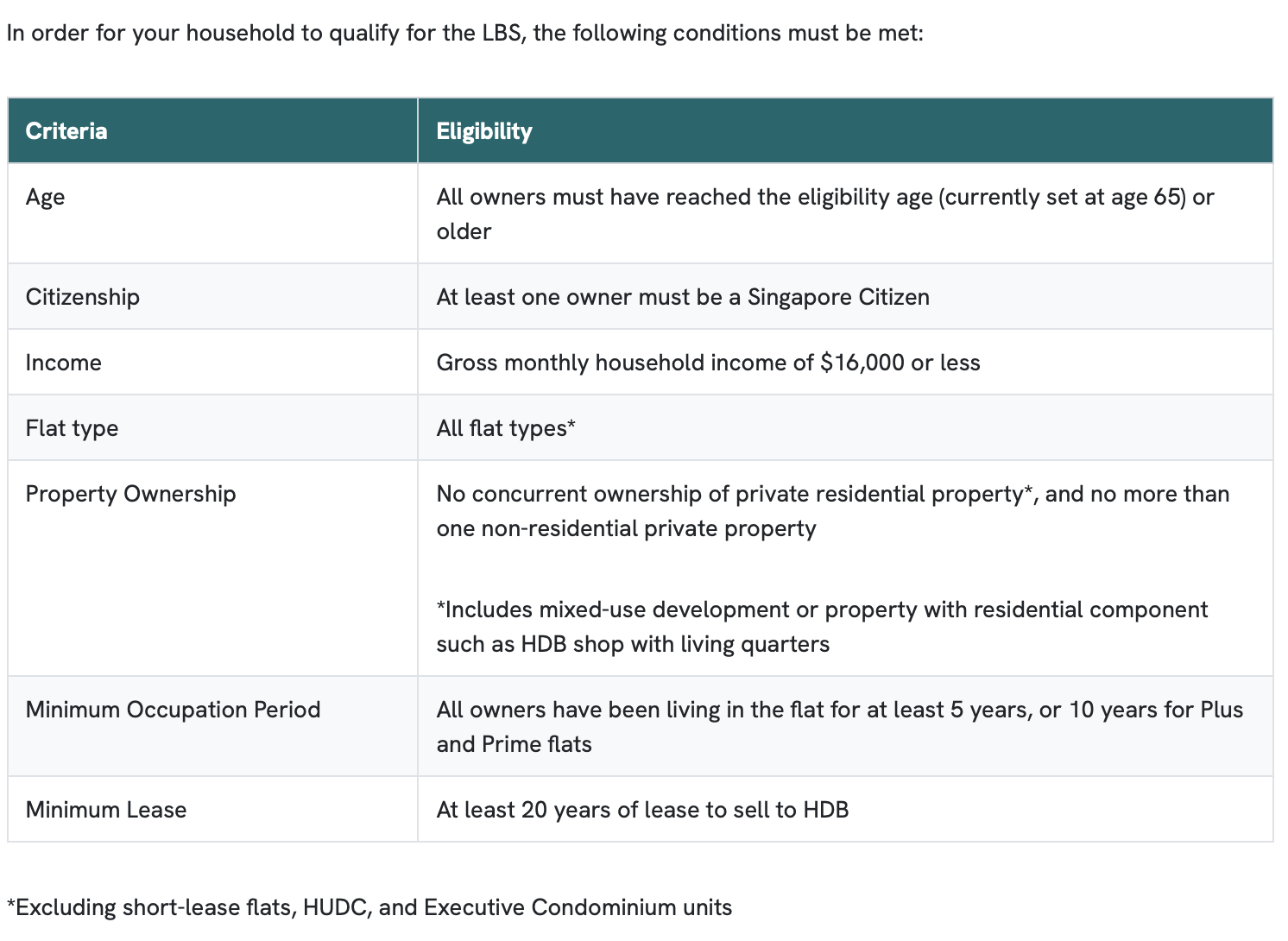
Where does the money go?
The proceeds from the lease buyback do not simply become a large lump sum of cash in your bank account. The proceeds will first be used according to the scheme's requirements, including topping up the owners' CPF Retirement Accounts (RA) to the applicable amounts.
For applications received from 1 January 2026, the top-up requirements depend on the owners' age and whether there is one owner or multiple owners.
For example, for owners aged 65 to 69:
One owner: top up to the applicable age-adjusted Full Retirement Sum (FRS)
Two or more owners: each owner uses their share of the proceeds to top up their RA to the applicable age-adjusted Basic Retirement Sum (BRS)
After the required top-ups, eligible households may retain proceeds in cash, subject to the scheme's rules.
There is also an LBS bonus
Eligible households can receive an LBS bonus of up to $30,000, depending on the flat type and the amount topped up to CPF.
The full bonus is available when the total CPF top-up reaches $60,000.
The maximum bonus differs according to flat size:
3-room or smaller: up to $30,000
4-room: up to $15,000
5-room or larger: up to $7,500
If the CPF top-up is below the required amount, the bonus may be prorated.
The biggest trade-off: you are giving up part of your lease
Once you participate in LBS, the flat is intended for ageing in place. The lease you sell is no longer yours. And during the remaining lease period, the flat cannot simply be treated like an ordinary HDB resale flat. You cannot sell the whole flat on the open market or rent out the whole flat.
Once you have committed to the scheme, that flexibility is reduced.
What happens if you outlive the lease?
This is another question that homeowners understandably worry about. HDB states that if an owner outlives the retained lease, they will not be left homeless. HDB will assess the individual's circumstances, including factors such as family support, health and financial situation, and work out an appropriate housing arrangement with the owner and family members.
What happens to the flat when the owner passes away?
If an owner passes away during the retained lease period, a spouse or child living in the flat may be able to continue living there for the balance of the lease, subject to the applicable eligibility conditions.
Alternatively, the flat can be returned to HDB. If the lease is terminated prematurely, HDB will reimburse beneficiaries for the remaining value of the lease based on a straight-line depreciation approach, subject to the scheme's terms.
There are also CPF LIFE considerations, including the treatment of any unused portion of the CPF LIFE premium.
So if leaving the flat to your children is an important part of your estate planning, don't look only at the amount you can unlock today.
Is LBS better than simply selling your flat?
Not necessarily.
It depends on what you are trying to achieve. If your priority is to stay in your existing home. LBS can be attractive because you can monetise part of the lease without having to move. This can be particularly relevant for older homeowners who have spent decades in the same neighbourhood and want to age in place.
If your priority is to maximise the amount of cash you can unlock. Selling the flat and downsizing could be worth comparing.
For example, a homeowner living in a relatively large flat may potentially sell the existing property and purchase a smaller one, releasing the difference in value while moving into a home that may be easier to maintain. But that comes with the very real cost of moving.
If your priority is additional monthly income. Renting out a spare bedroom could be another option, assuming the homeowner is comfortable with having a tenant at home. It may provide an ongoing income stream without giving up part of the flat's remaining lease.
The trade-off, of course, is privacy and having someone else living in your home.
A home is more than its market value
For many retirees, their HDB flat is not just an investment. It is the neighbourhood they know, the community they built, and the home where their children grew up.
That is why the Lease Buyback Scheme can be useful — it recognises that some homeowners want to unlock part of their housing wealth without giving up their home entirely. But the scheme also involves giving up part of the lease and some future flexibility.
So rather than asking: "Should I do LBS? I think the better question is: "What kind of retirement do I want, and what role should my home play in it?" Once you answer that, it becomes much easier to compare LBS against downsizing, selling, renting out a room or simply staying put.
Final Thoughts
If you're considering LBS, I would start with three numbers:
Your flat's current market value → the remaining lease → the amount you actually need for retirement.
From there, compare the different options rather than looking at LBS in isolation. A property that has been fully paid off may give you more choices than you realise — but the "best" option depends on whether your priority is staying, cash flow, flexibility or passing the asset on.
Let's Talk About Your Situation
If this article helped answer some of your questions but raised a few new ones, you're not alone. Every property journey is different. If you'd like to discuss your own situation or have a question after reading this article, feel free to leave me a message below.